
THORENS · SWITZERLAND · SINCE 1883
Time on the Wrist
More than a century of watches and mechanical ingenuity.
The Thorens name is best known internationally for Swiss mechanical objects, yet timekeeping
represents another, less familiar thread in the story: clocks incorporated
into useful objects, watches associated with sound mechanisms and fire, minimalist
wristwatches by the 1970s, and today a contemporary Swiss-made watch called
the Eiger.
A mechanical culture
Time was never an isolated function.
Thorens began in Sainte-Croix in 1883 in a Swiss environment where precision
mechanics, movements and ingenious consumer objects naturally
overlapped. Over subsequent generations, the Thorens name appeared on clocks, lighters, watches and combinations of these functions.
That history helps explain some remarkably inventive historical Thorens
objects. A clock did not necessarily need to stand alone. It could share
its case with a lighter.
A practical object could also be something to display, touch and keep.
Thorens did not merely make mechanisms smaller.
It found new places for them to live.
Time meets fire
When time met everyday mechanics
Before multifunction became a digital concept, mechanical manufacturers
experimented with combining independent functions inside a single physical
object. Thorens became associated with precisely this kind of ingenuity.
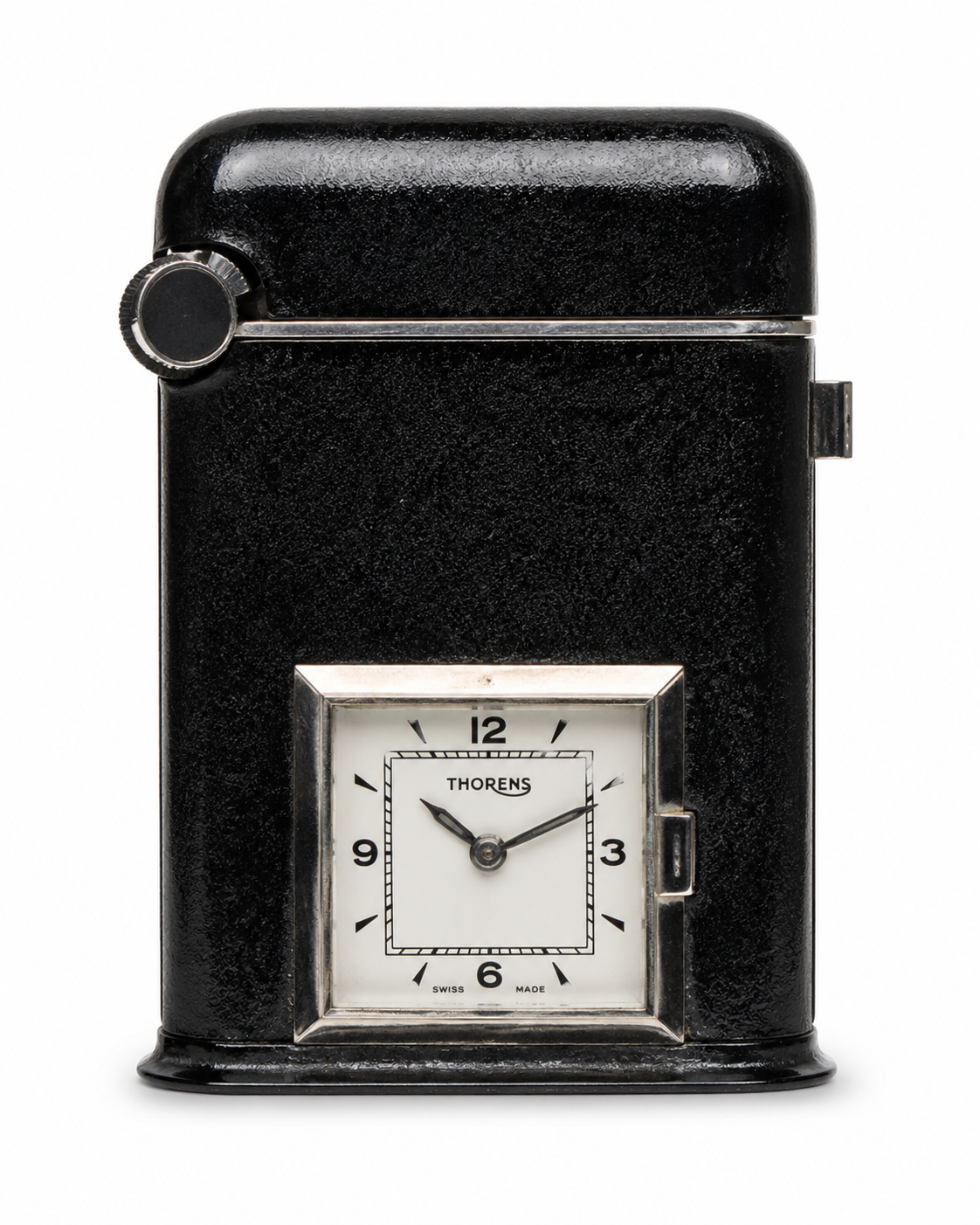
Historical Thorens pieces combined timekeeping with lighters and sound
mechanisms, turning objects of everyday utility into miniature demonstrations
of Swiss mechanical culture.
Here the clock is not hidden inside the product. It is an integral part of
the design, sharing the object with the lighter mechanism and creating a
piece intended to be both useful and visually distinctive.
Time meets sound
A clock in the world of the music box
Mechanical movements were among the products that established the company in
Sainte-Croix, and the same culture of compact precision naturally extended
into clocks and timekeeping.
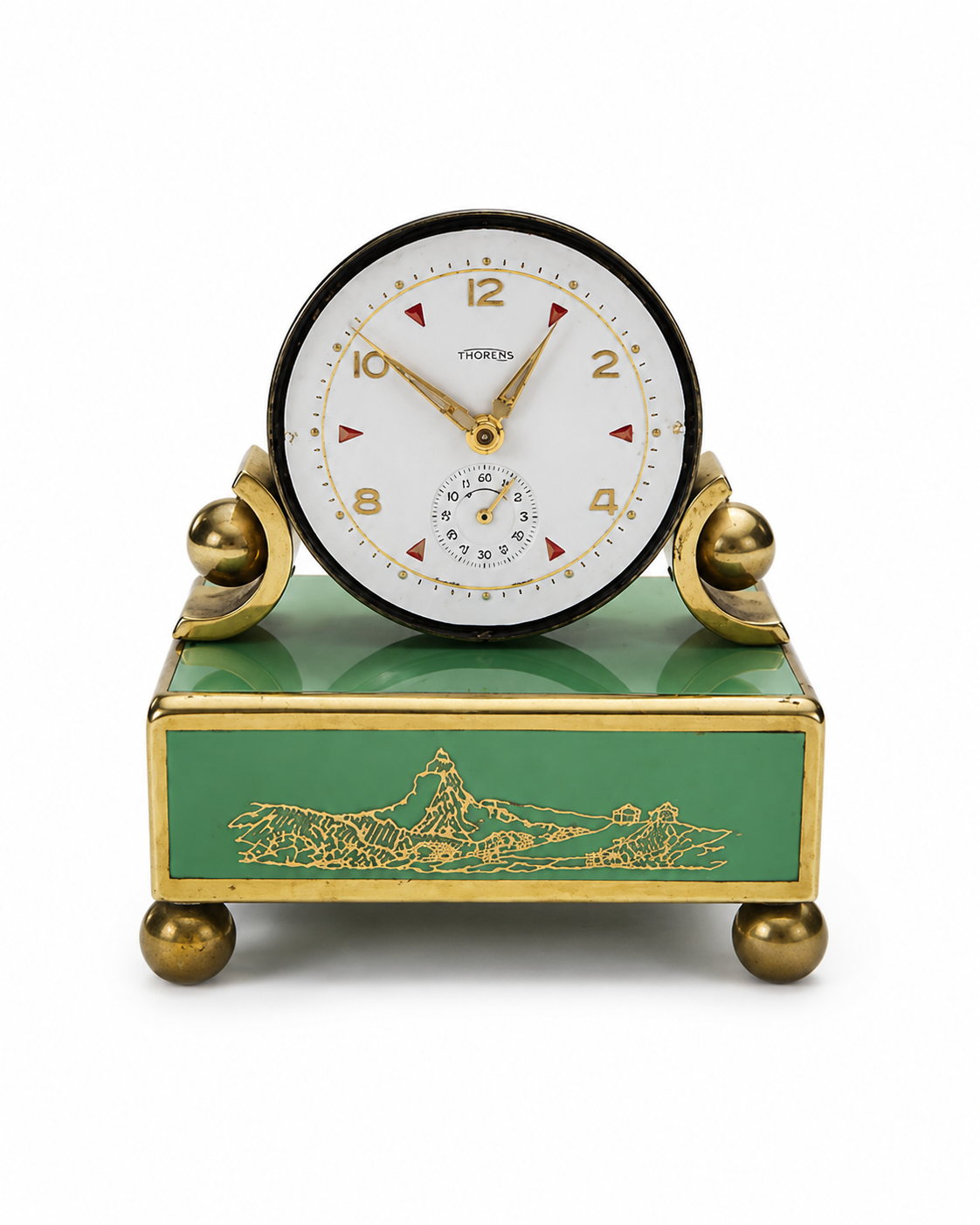
Historic Thorens objects brought these traditions together in decorative
clocks and combinations of watches and other mechanisms.
They were not conceived merely as instruments for displaying the hour:
the case, movement, decoration and mechanical experience formed one object.
Mechanics became part of the pleasure of ownership.
Swiss multifunction
Two functions. One object.
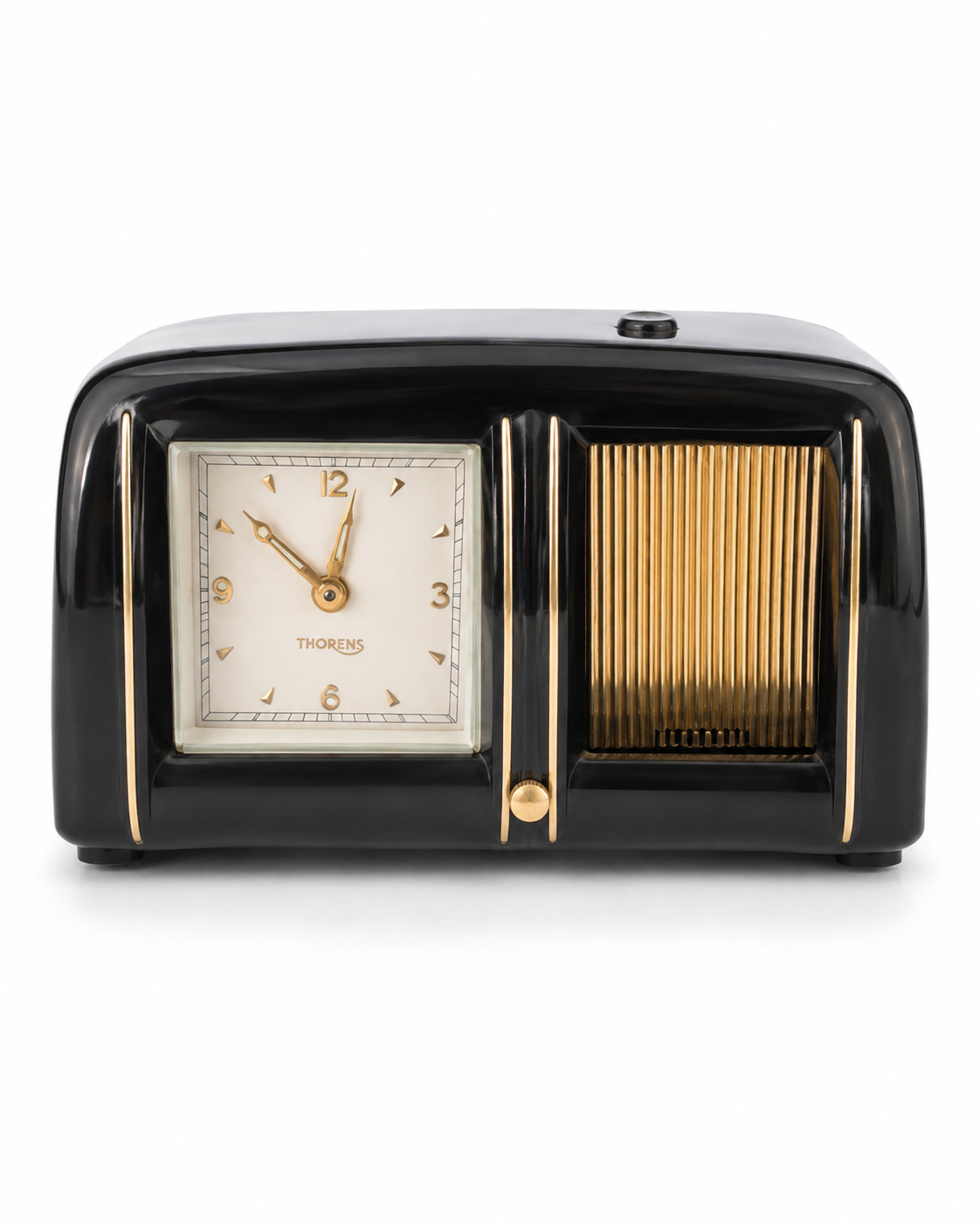
The horizontal clock-and-lighter combination is perhaps the clearest
expression of this philosophy. Rather than disguising one mechanism
within another, the design gives each function its own place.
The clock occupies one half of the façade while the lighter occupies
the other, both contained within one compact case. It is mechanical
integration expressed through design rather than software.
Evolution
From the table to the wrist
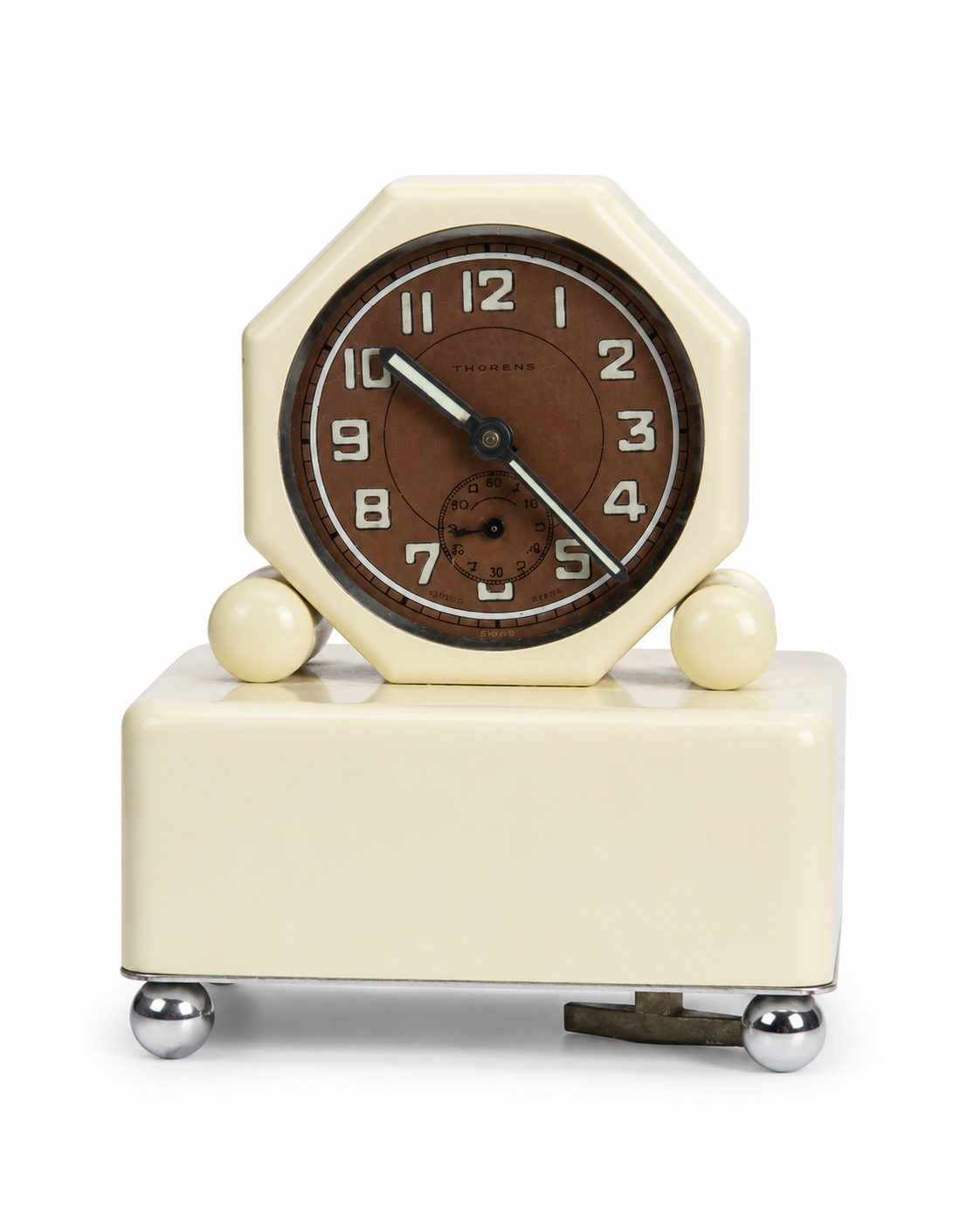
Table clocks allowed the movement to become part of an interior:
decorative, architectural and deliberately visible. Wristwatches
changed the relationship with time by making it personal and portable.
By around the 1970s, Thorens wristwatches had taken this idea in a notably
minimalist direction. The elaborate combinations of earlier decades
gave way to exceptionally slim cases, integrated bracelets and
restrained dials.
Timekeeping no longer needed to share the object with another mechanism.
The watch itself became the object.
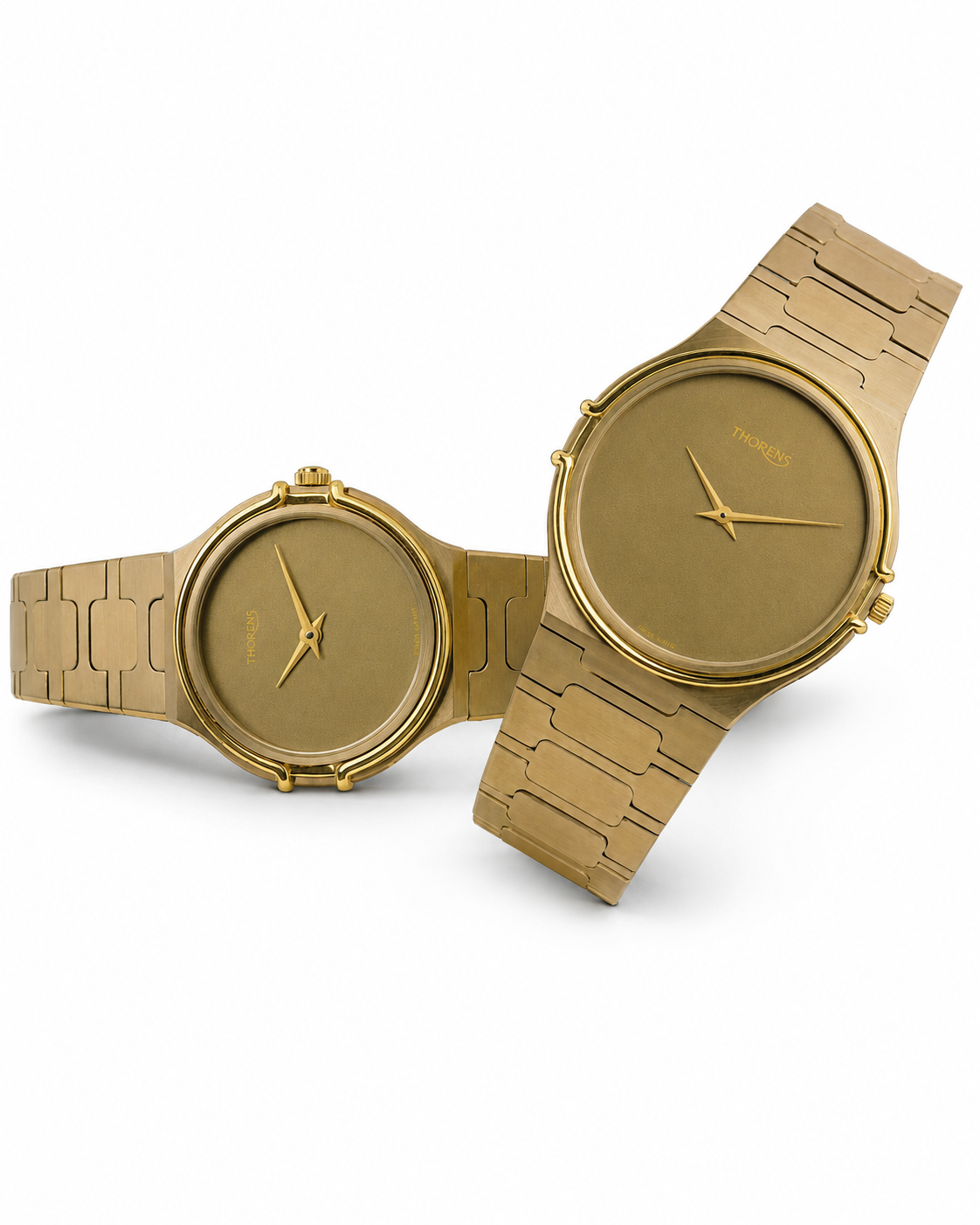
Circa 1970s
Thorens on the wrist
These two vintage Thorens watches provide a remarkable visual bridge
between the company’s historic mechanical objects and its contemporary
return to wristwatches.
Their appearance is characteristic of the period: extremely thin round
cases, integrated metal bracelets, almost monochromatic surfaces and
remarkably little decoration.
The bracelet and case appear as one continuous form, while the simple
dial allows the Thorens signature and the geometry of the hands to do
almost all the visual work.
From complicated mechanical combinations to the simplicity of time
on the wrist.
A continuing story
More than a century of time and mechanics
1883
Sainte-Croix
Thorens emerges from the Swiss tradition of precision mechanical
production and box mechanisms.
EARLY 20TH CENTURY
Music, clocks and lighters
Timekeeping becomes part of a broader family of ingenious Thorens
mechanical objects and combined products.
MID-20TH CENTURY
Combined mechanical objects
Clocks, sound mechanisms and lighter functions appear together
in unusual objects for the desk and home.
CIRCA 1970s
Thorens wristwatches
Thin cases, minimalist dials and integrated metal bracelets bring
Thorens timekeeping decisively onto the wrist.
TODAY
The Eiger
A contemporary Swiss-made wristwatch reconnects the Thorens name
with practical everyday timekeeping.
The contemporary chapter
The Eiger
A straightforward Swiss watch built around the qualities that matter
in everyday use.
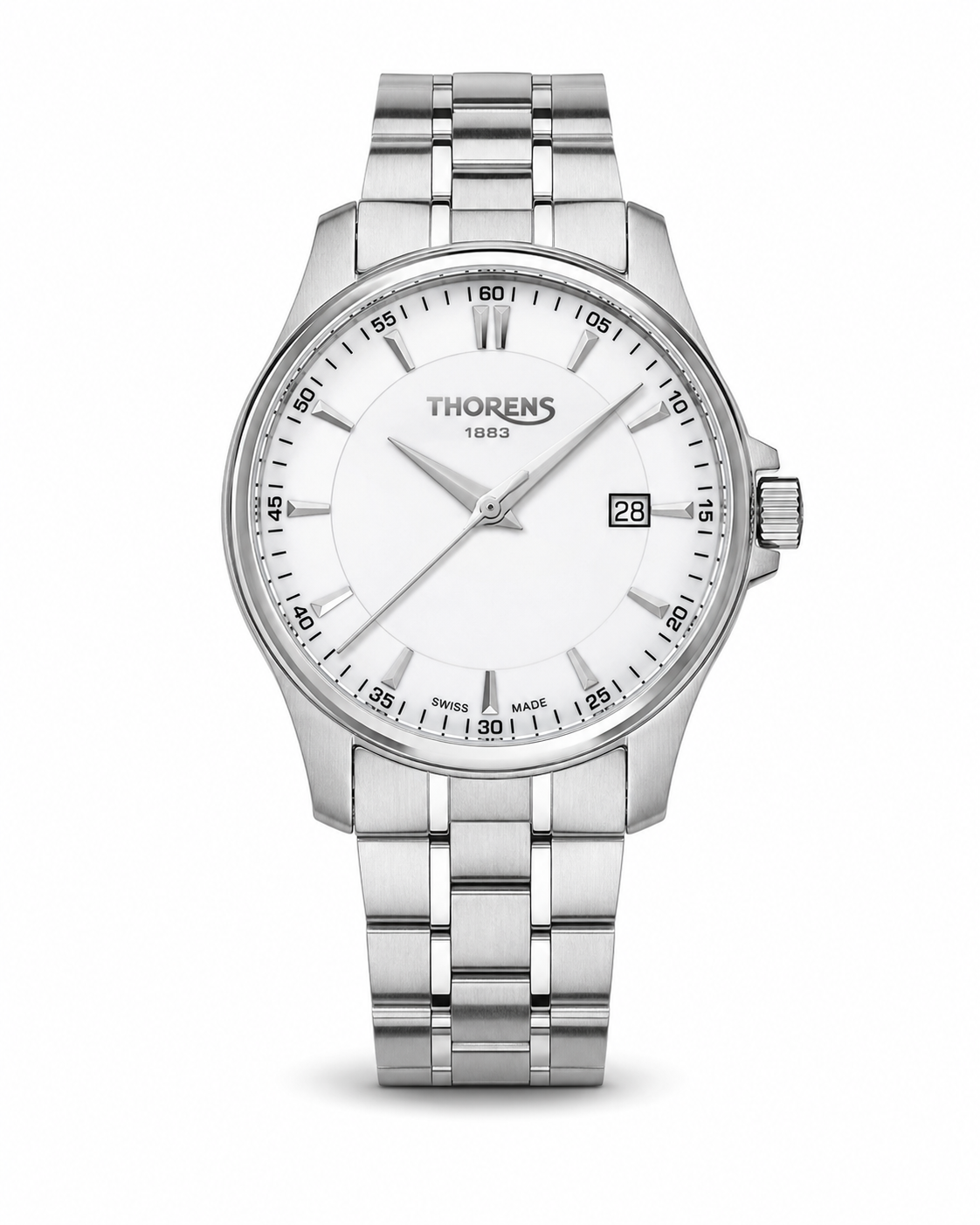
The Eiger does not attempt to recreate a historic Thorens watch.
Instead, it continues a simpler idea visible in the vintage wristwatches:
a restrained dial, metal construction and a watch intended to be
worn rather than treated as an object of excess.
SWISS MADE
STAINLESS STEEL
SAPPHIRE CRYSTAL
QUARTZ
DATE
100 M
ORIGIN
Swiss Made
CASE
Stainless Steel
CRYSTAL
Sapphire
MOVEMENT
Quartz
FUNCTION
Date
WATER RESISTANCE
100 metres
A direct idea of Swiss Made
Swiss character without unnecessary complication
The contemporary watch market often associates Swiss manufacture with
increasing complication and exclusivity. The Eiger follows a more direct
philosophy, concentrating on the materials and functions that contribute
to everyday use.
Stainless steel provides durability. Sapphire protects the dial. A quartz
movement provides straightforward precision. A date window adds everyday
utility, while 100-metre water resistance makes the watch suitable for
regular use.
The value is in the object itself rather than in unnecessary complication.
1883 → Today
Objects that move
A musical cylinder rotates.
A lighter wheel rotates.
A record rotates.
The hands of a watch rotate.
Different objects and different generations, united by an enduring
fascination with controlled movement.
THORENS · SWITZERLAND · 1883
The story continues on the wrist.
Discover the Swiss-made Thorens Eiger and the current collection.
Continue exploring the Thorens story
 thorens1883.com